















Fall Checklist: Preparing Your Solar System for Winter
-
seasonal-solar
-
fall maintenance
-
winter prep
-
DIY checklist
-
solar care
Here's the honest version first: most "winter prep" advice for solar systems is filler. The list of things that actually move the needle is short — a couple of things to do, and a few to stop doing. Everything else is overthinking it.
A rooftop system is meant to be hands-off. That's the whole point. But autumn is when small problems get louder — falling branches, low sun angle, more rain, the first frost, eventually snow. Twenty minutes in October beats a service call in January. Not because the system is fragile; because the gap between "looked after" and "didn't" gets visibly wider through the dark months.
The short version
- Trim what's overhead. A branch that shades part of the array for several hours a day costs far more yield than a few dirty panels.
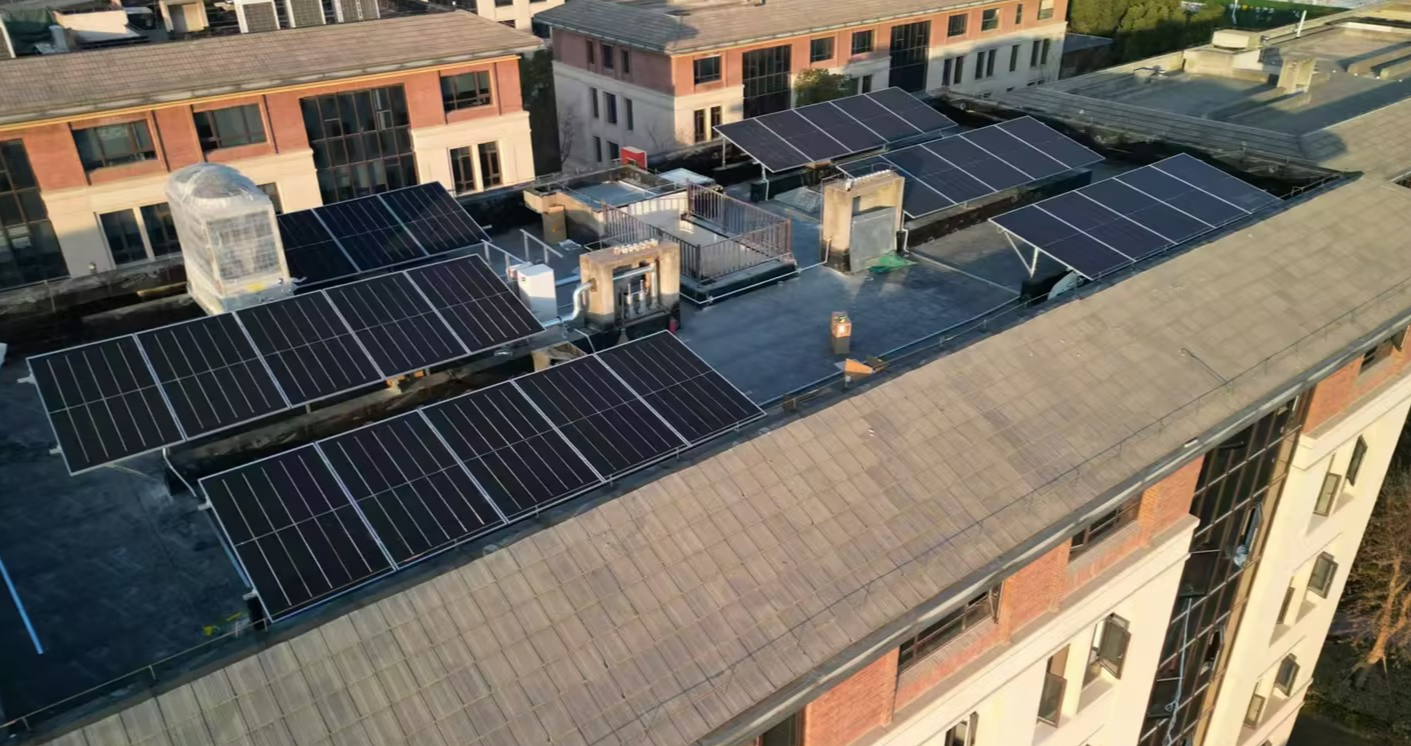
- Look at the panels from the ground. Leaves, bird nesting, moss edge — none of these need a professional to spot.
- Check your monitoring app is alive. No alerts in summer does not mean the inverter is fine in winter.
- Inspect DC and AC isolators + visible cabling. Moisture ingress is a winter problem, not a summer one.
- Glance at firmware. If there's a pending update, let it run. If it's set to auto-update, you're done.
- Plan for snow. Sliding snow is normal; kicking panels is not.
- Adjust your evening schedule. The sun clocks out earlier; your dishwasher doesn't care.
If you do nothing else, do the first two. They move the most yield.
Two homes on the same street
Picture two neighbours, both with 10 kWp systems installed three years ago.
The first trimmed the overhanging walnut in October, glanced up at the panels once a month, and let one firmware update run in November. Their December output came in within a few percent of what the monitoring model predicted.
The second skipped the trim — walnut branches are heavy in summer, easier to leave. By February, three of the panels on the lower row were sitting in late-afternoon shade. December output came in 12% under forecast. Same system, same roof, same sun. The difference was a tree and a Saturday afternoon.
Fall is when the gap between "looking after it" and "not" gets visibly wider. Most of what creates it isn't complicated — it's just ignored.
The seven fall checks
1. Look up
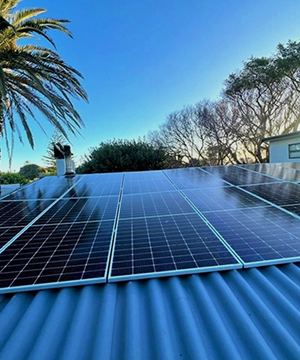
Binoculars are enough. You're looking for: leaves piled under the lower edge of a panel, moss creeping onto the frame, a bird's nest under the array, cable that has come loose from a clip.
None of this requires touching the panels. Most of it requires you standing in the garden for two minutes.
2. Trim what's overhead
This is the highest-yield check on the list. A single branch that shades part of the array for several hours a day will quietly cost more yield than every other item on this checklist combined. (How much depends on the array layout, the time of day, and whether shade hits one panel or a whole string — so this is one of those areas where a real number depends on the system in front of you.)
A worked scenario to make it concrete, not a promise: imagine a 10 kWp system in Central Europe making roughly 9,500 kWh a year. If a single shaded string loses you about a third of what it would otherwise make across a winter afternoon, that's somewhere in the range of ~500 kWh for the year (illustrative — depends on string configuration and shade timing). At a retail electricity price of €0.30/kWh, you're looking at roughly €150 a year that goes nowhere.
The fix is usually one afternoon with a pole saw — or a call to a tree surgeon if the branch is over the roof.
3. Open your monitoring app
Not to look at yesterday's yield — to confirm the inverter is still talking to the internet. A monitoring system that quietly went offline in August won't tell you the inverter is unhappy in December.
Three things to check:
- Last data point is recent (within the last hour).
- No "communication lost" or "DC undervoltage" warnings.
- Your contact details for alerts are still correct.
4. Inspect DC and AC isolators and visible cabling
You don't need to open anything. You're checking for: cracked insulation on external cable runs, isolator switches that look weathered, water staining around the inverter's mounting plate. If anything looks off, that's the one item worth a service call before the first hard frost.
5. Glance at firmware
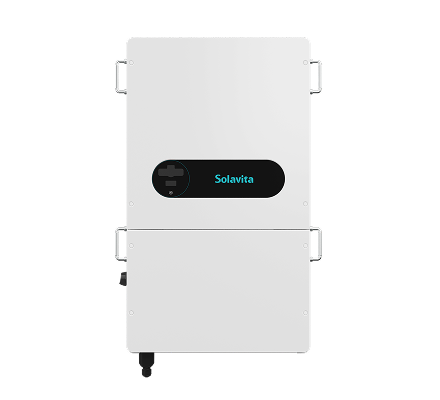
Open your inverter's app. If there's a pending firmware update, let it run — most modern systems push them over the air. If your installer already set it to auto-update, close the app. That's the whole job.
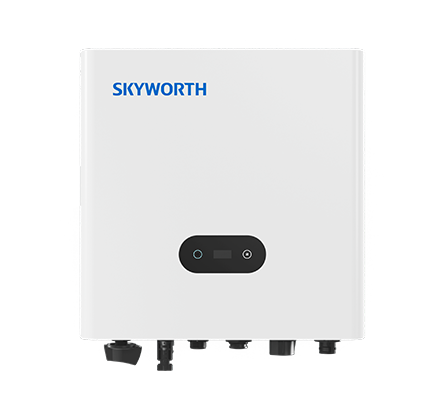
Don't turn this into a research project. Modern inverters, including SKYWORTH's residential range, generally ship updates between October and January that touch winter behaviour and low-light thresholds, but you don't need to know the details. Let the device handle it.
6. Plan for snow — and resist the urge to climb
Panels are rated for typical roof snow loads in their market; a normal German or Austrian winter is well within design. Smooth, tilted glass sheds snow within hours of a sunny morning. Resist the temptation to brush panels from a ladder — the glass is tempered, not invincible, and a slip is worse than any winter yield dip.
If a heavy snow load is genuinely a concern in your region, ask your installer about panel mounting angle or whether a roof snow guard would help the array (it usually doesn't, but the question is worth asking once).
7. Adjust your evening schedule
The sun clocks out an hour earlier in October than it did in August. Your battery (if you have one) and your high-load appliances care about this. Move dishwasher and washing machine cycles to start mid-afternoon rather than after dinner; if you charge an EV at home, shift the start window a couple of hours earlier.
This is the cheapest change on the list, and over a six-month winter it adds up.
Three things to leave alone
A short list of what not to do, because the internet is full of bad advice:
- Don't pressure-wash panels. The anti-reflective coating does not appreciate a 100-bar jet. Rain handles most of it.
- Don't cover panels in winter to "protect" them. They need the light. A cover costs you yield and can trap heat unevenly against the glass.
- Don't panic about winter output. A solar system in Central Europe produces far less of its annual yield in the four coldest months than in the four warmest — that's normal, that's design, and it does not mean the system is broken.
When to call the installer
Call them if: the monitoring app is offline and a router restart doesn't fix it; you see a warning light on the inverter; visible cabling looks cracked or loose; output is more than 15–20% below the seasonal forecast for more than a week. None of these are expensive to fix in October. All of them get more expensive in February.
If you'd rather have someone handle the inspection, an installer can check the system before winter. That's the most you'll ever need to pay for in this article.
A winter-ready system, end of season
Fall prep is not a maintenance season the way a car is — you don't need to do all of this every year. The first time you go through the list takes an hour. The second time takes fifteen minutes, because you already know what "normal" looks like on your own roof.
The mental model worth keeping is simple: a solar system has an input side (light hitting the panels) and an output side (inverter, cabling, monitoring). Most winter problems are input problems (shading, debris, low sun angle) or output problems (an inverter that's lost its connection, a cable that wasn't tightened in spring). Everything else is overthinking it.
If you remember nothing else, remember this: trim one branch, open one app, walk the garden once. That's the entire job, almost always.
Your next step: pick a Saturday in October. Walk the garden with this list. Trim one branch. Open the monitoring app. That's it.
Sources: BSW-Solar operation and maintenance guidance (illustrative), Fraunhofer ISE winter output data, inverter manufacturer operation manuals (general industry-typical reference).
Data & methodology: All numerical examples are illustrative scenarios, not industry-standard claims or Solavita project data. Output figures and price points depend on array layout, roof orientation, region, and tariff; the worked calculation in §2 is a scenario, not a forecast.
Technical reviewer: (to be assigned before publication)


Sign up to our latest blog
By signing up for our newsletter, you agree to the termsoutlined in our privacy policy. You can unsubscribe atany time.