



















Solar + Battery: Is It Worth Adding Storage to Your Existing System?
-
solar-plus
-
battery retrofit
-
home battery
-
AC-coupled
-
storage
-
payback
If your panels have been on the roof for a few years and you're now wondering whether to add a battery — that's the right question.
Here's the honest answer. A retrofit battery pays back in roughly 10 to 15 years for most households across Western Europe — sometimes faster, sometimes not at all. (Planning range; specific numbers depend on your country, your existing inverter and your evening consumption.)
That range is wide because the decision is wide. What's worth walking through is why it varies — and where your home sits on the spectrum.
The short version
Planning figures for a typical Western European home. Your numbers depend on your country, existing inverter and evening consumption.
| What | Answer |
|---|---|
| Typical retrofit cost (5–10 kWh) | ~€5,000–€8,000 installed |
| Bill savings, well-matched home | ~€400–€700 a year |
| Simple payback on savings alone | ~10–15 years |
| When the math usually works | wide retail/export price gap · evening loads (EV / heat pump) · backup power matters |
| When the math usually fails | generous export tariff · modest bill · no evening shifts |
The battery earns its keep when it captures surplus you'd otherwise export cheaply — and when you actually use that stored energy in the evening. If those two things aren't true, it's a luxury, not an investment.
First, the question most people forget to ask
Before talking payback, there's a more basic question: will your existing system accept a battery at all?
Two paths exist, and which one you need depends on what you already have on the roof.
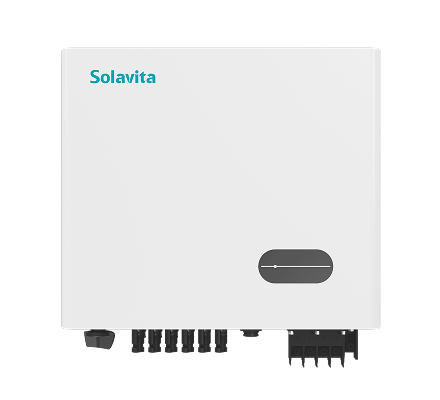
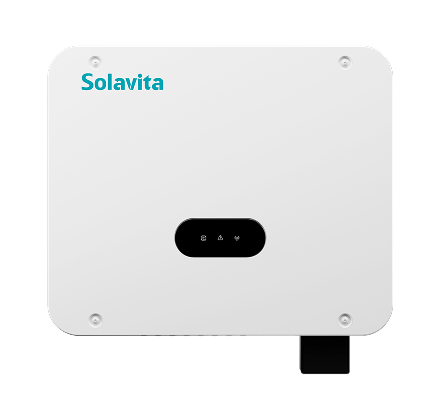
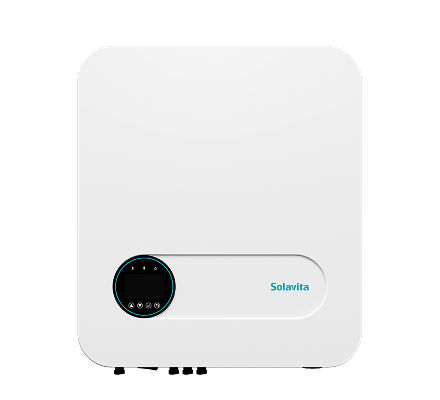
- String inverter (the older, simpler setup) — one central inverter converts DC from all panels to AC for the house. Adding a battery here usually means installing a separate battery inverter next to it. This is the more common retrofit path and is called AC-coupled.
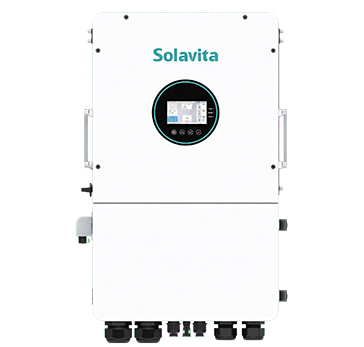
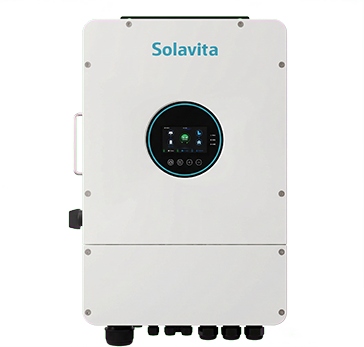
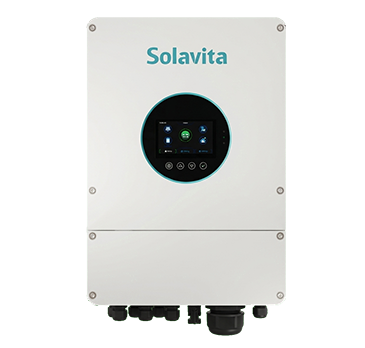
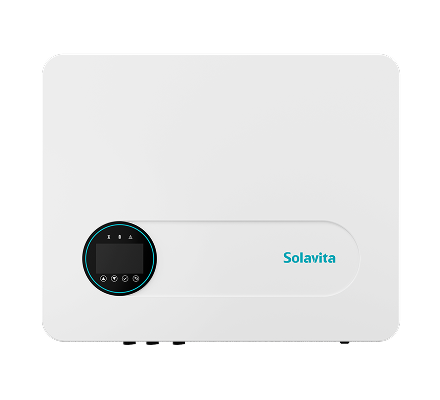
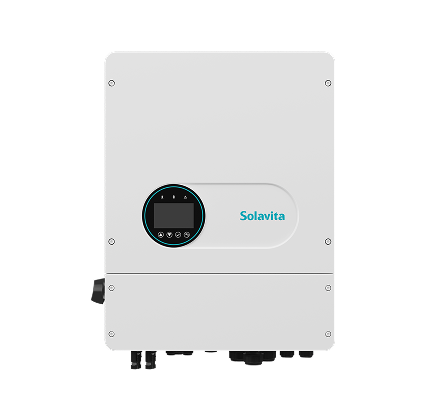
- Hybrid inverter (newer systems, or systems installed with future-proofing in mind) — the inverter already manages both panels and a battery on the DC side. Adding storage here is simpler and cheaper; the battery plugs into what you already have. This is DC-coupled.
Why does this matter for your bill? Because each path has different equipment costs, different installation complexity, and slightly different efficiency losses. A DC-coupled retrofit on a hybrid inverter is often the cheaper, cleaner install. An AC-coupled retrofit onto an older string inverter works fine — but expect labour and balance-of-system cost to land a bit higher, and round-trip efficiency to come in a few percentage points lower.
If your inverter is more than 8–10 years old, ask whether replacing it at the same time makes sense. Sometimes yes, sometimes no — but it's a question that should be on the table, not assumed away.
How much would your bill actually drop?
This is where most battery marketing gets slippery. To make the numbers concrete, let's walk through a German example — retail around €0.30/kWh, feed-in around €0.08/kWh in 2026. The same logic applies elsewhere in Western Europe; only the inputs change.
Say your existing system produces about 9,500 kWh a year (illustrative — depends on location, orientation, shading), and your household uses 4,500 kWh. That leaves roughly 5,000 kWh of surplus.
Without a battery, most of that surplus flows back to the grid at the export tariff.
With a battery sized to soak up the daytime surplus and use it in the evening, your self-consumption rate rises. The exact rise depends on your evening load profile, but for a household that actively shifts cooking, laundry, and entertainment into the evening, a battery can lift self-consumption from around 30% to 60–70%.
Translated into money:
| Scenario | Calculation | Result |
|---|---|---|
| Self-consume evening kWh | ~2,500 kWh × €0.30 retail | ~€750 saved per year |
| Same kWh, exported instead | ~2,500 kWh × €0.08 feed-in | ~€200 earned per year |
| Difference per year | ~€550 |
That €550 a year — against €5,000–€8,000 of installed cost — is roughly 9 to 14 years of payback for this specific setup. That sits inside the 10–15-year planning range above: the narrow number comes from these specific inputs; the wider range covers homes with smaller bills, lower evening loads, or different retail/export gaps.
If you want to plug in your own roof, generation, and tariff, the calculator at the bottom of this page does exactly that.
When the battery clearly pays off
The math usually works when several of these line up at the same time — not just one or two in isolation.
- Your export tariff is low (€0.08/kWh or less) and your retail price is high (€0.28/kWh or more). The wider the gap, the more every kWh you self-consume instead of exporting is worth.
- You have (or plan to add) big evening loads — an EV that charges overnight, a heat pump that runs heating and hot water in the evening, a household that cooks and does laundry after work.
- Power cuts are common or consequential in your area. Backup capability is a real, hard-to-price benefit that pure bill-savings math doesn't capture.
- You value predictability over optimisation — you'd rather pay a known storage cost than ride wholesale price volatility, time-of-use shifts, or tariff changes.
When those line up — especially the combination of a wide retail/export gap and an evening load you actually fill — the math shifts from marginal to comfortable. Drop any one of them and the case gets weaker, though it doesn't have to collapse entirely.
When it doesn't
There are also homes where the battery math doesn't work today.
- You have a generous export tariff — some markets still pay €0.15–€0.25/kWh for exported solar. If you're on one of those, exporting is fine and the battery shrinks to a convenience purchase.
- Your electricity bill is modest (under ~€800–€1,000 a year). The absolute savings are too small to amortise the battery cost.
- Your existing inverter is old, undersized, or in a difficult location, and retrofitting means replacing it too. Once you're replacing the inverter, you're effectively building a new system — and the comparison changes entirely.
- You don't (and won't) shift loads into the evening. A battery is a reservoir; an empty evening is wasted storage.
In any of these cases, the cheapest path is usually to let the export tariff do the work for now, and revisit the battery question in 2–3 years when prices keep falling.
AC-coupled vs DC-coupled — what actually matters for your retrofit
This is the one technical decision worth understanding before you sign.
| Path | Best for | Trade-off |
|---|---|---|
| AC-coupled | Older systems with a working string inverter | Works with what you already have · ~5–8% extra conversion loss · more wall-box equipment |
| DC-coupled | Systems with a hybrid inverter (or replacing the inverter now) | Higher round-trip efficiency · simpler install · needs inverter compatibility |
For most retrofits, the choice is forced by what inverter is already on the wall. If you're starting from scratch or replacing the inverter anyway, DC-coupled on a hybrid inverter is usually cleaner. If you're keeping a healthy older inverter, AC-coupled is the path that lets you keep what you've already paid for.
Pick compatibility first, brand second. A battery that doesn't work with your existing inverter isn't cheaper just because the price tag is.
Run your numbers
Everything above is the shape of the decision. Your actual payback depends on your current inverter, your evening load pattern, and the retail-vs-export gap in your specific market — none of which a generic article can give you.
A battery-retrofit calculator takes your current inverter, annual generation, electricity bill and export tariff, and shows the payback under today's rates (not a forecast). It also flags whether your existing inverter needs replacing before a battery can be added cleanly.
Calculate Your Battery Payback →
The useful question isn't whether batteries are good. It's whether the numbers work in your house.
Last updated: 2026 · Sources: Industry-typical installed-price ranges for residential battery retrofits in Western Europe (illustrative); German retail and feed-in tariff figures as of 2026; standard references on AC- vs DC-coupled round-trip efficiency. · Data & methodology: All cost and savings figures are illustrative ranges based on industry-typical data, not Solavita project data; the worked example uses German retail ~€0.30/kWh and feed-in ~€0.08/kWh as concrete inputs and is intended to show the shape of the decision, not to predict individual outcomes. · Technical reviewer: (to be assigned before publication)


Sign up to our latest blog
By signing up for our newsletter, you agree to the termsoutlined in our privacy policy. You can unsubscribe atany time.